Dr Rob David’s career was in history and education in Cumbria and Lancashire. He has been President of the Cumberland and Westmorland Antiquarian and Archaeological Society, Chair of Cumbria Industrial History Society, Ambleside Oral History Group and Friends of Cumbria Archives. Since retirement he has written on the history of refugees in 1930s Cumbria, rediscovering the story of the Basque child refugees who came to the county in 1937. Most recently he has revealed the story of Muncaster Castle’s role during the Second World War as one of the repositories for the paintings from the Tate Gallery in London.
A chance discovery while researching the refugee communities who were welcomed to Cumbria during the 1930s revealed that Howtown was not the backwater that one might have expected, but became a centre of MI5 interest for a few months in the summer of 1940. The arrival of two women dismissed from their London jobs supporting Czech refugees because of what Special Branch considered to be their dangerous interest in communism, led to the Shap policeman’s greatest hour and an interest in what was happening in Howtown in the highest levels of the British secret service. The story emerged from studying newly released MI5 files in The National Archives in London. ‘A Hotbed of Communist Activity’: Howtown, the Red Menace, Czech refugees and MI5 during the summer of 1940′ tells this unlikely story. Your next visit to Howtown will be so much more interesting because of what you now know!
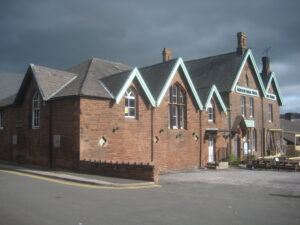
The Agricultural Hotel where two women being pursued by MI5
stayed on their way to Howtown in June 1940.
